Contract winemaking
Every client’s wine, kept in its own name.
CellarFlo marks each wine with its owner through every tank, barrel and job, records each client’s costs and charges as the work is done, and turns a client’s month into an export for your accounting software.
Contract winemaking is the Contract Winemaking add-on, available on every plan.
Ownership
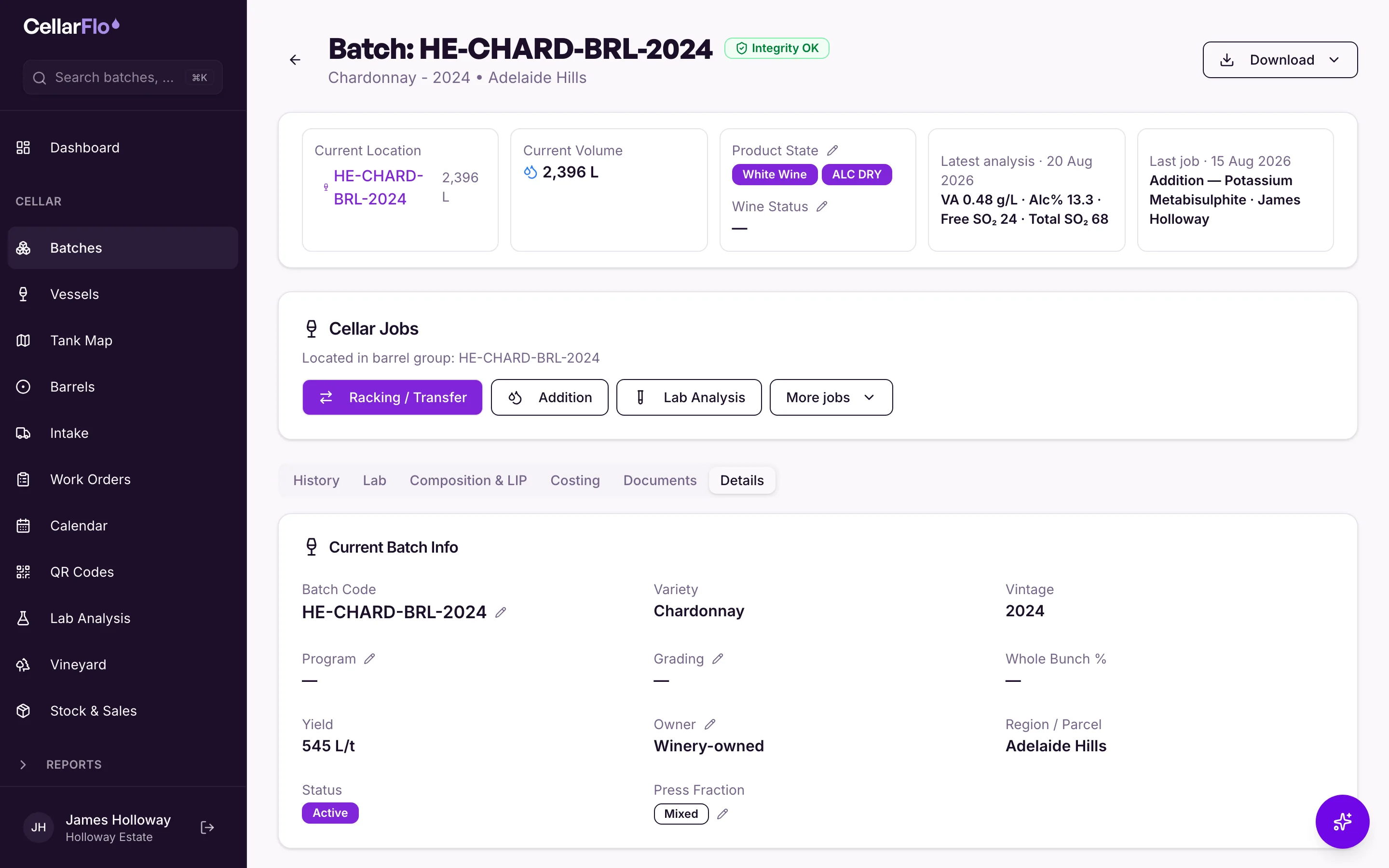
Client wine is marked with its owner.
Each batch carries its owner, so a client’s wine is told apart from yours in every tank, barrel and job. Filter by owner to see one client’s wine, vessels and barrels.
A wine can belong to more than one owner, each with a percentage. When it loses volume, every owner loses in proportion, and its cost is shared the same way.
Costs and charges
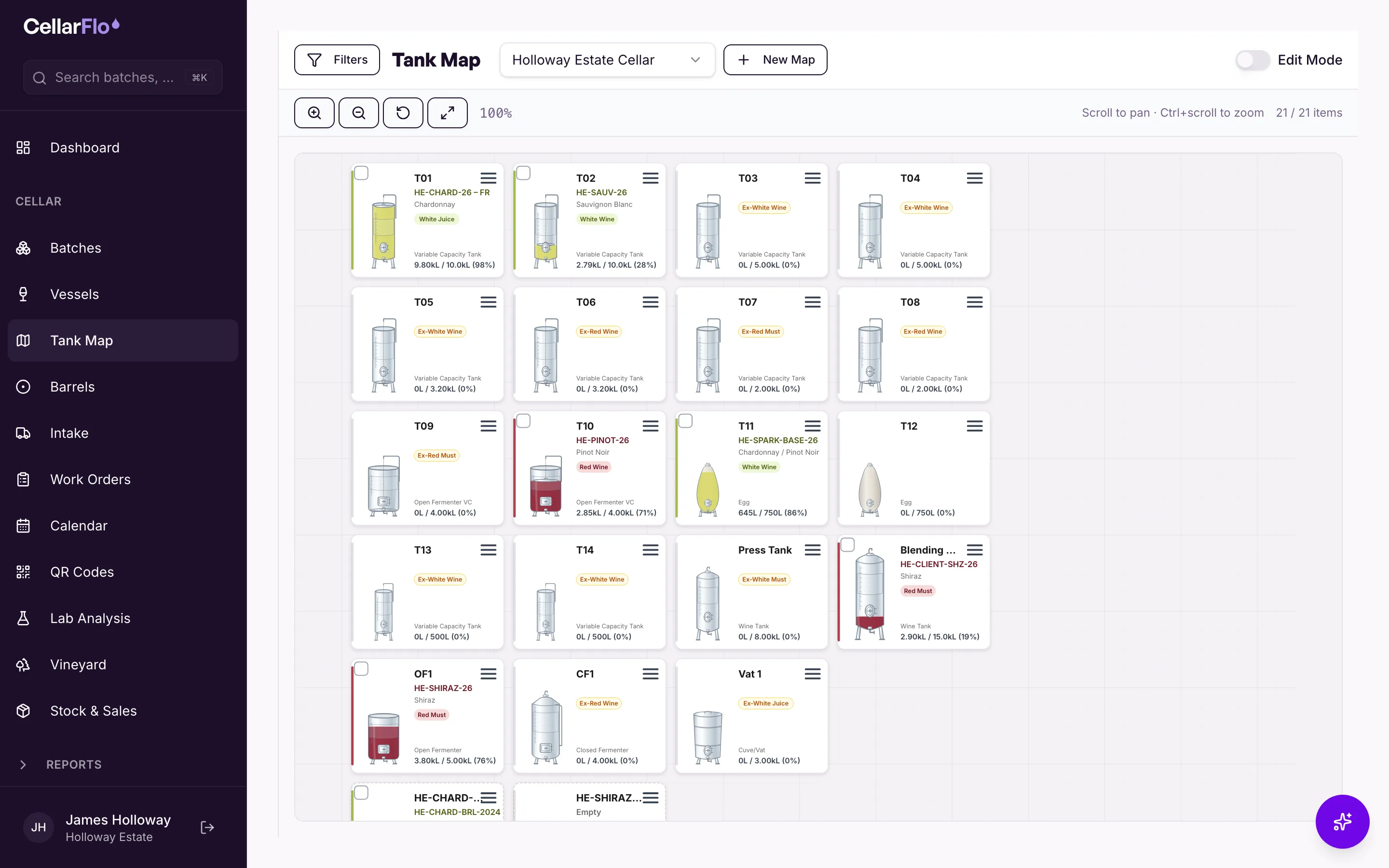
Recorded as the work is done.
Costs on the client’s wine.
Every cost on a client’s wine is a dated entry with its type, its owner and whether it is billable. Labour is billable by default, with a switch for each client.
Charges from a rate card.
Bottling set-up, bottling per case, materials, receiving, dispatching, picking, storage and your own fees are charged at the client’s rates on the day. A charge never changes the wine’s cost.
Storage worked out for you.
Storage is charged per pallet space, by the week or the month, from the client’s bottles and dry goods held each day, and closed once a month. A rate that is missing shows as “Not recorded” and is never billed.
Billing
A client’s month is an export.
The month lists the client’s billable costs by type, and each charge with its quantity and rate. Export it as a CSV or, on Estate and above, send it as a draft invoice to Xero, MYOB or QuickBooks. CellarFlo does not invoice; your accounting software does.
A month you have exported never changes. A cost entered late, or undone after the export, shows on the next month as a flagged late entry or credit line.



Xero, MYOB and QuickBooks are trademarks of their owners.
Bottling and dispatch
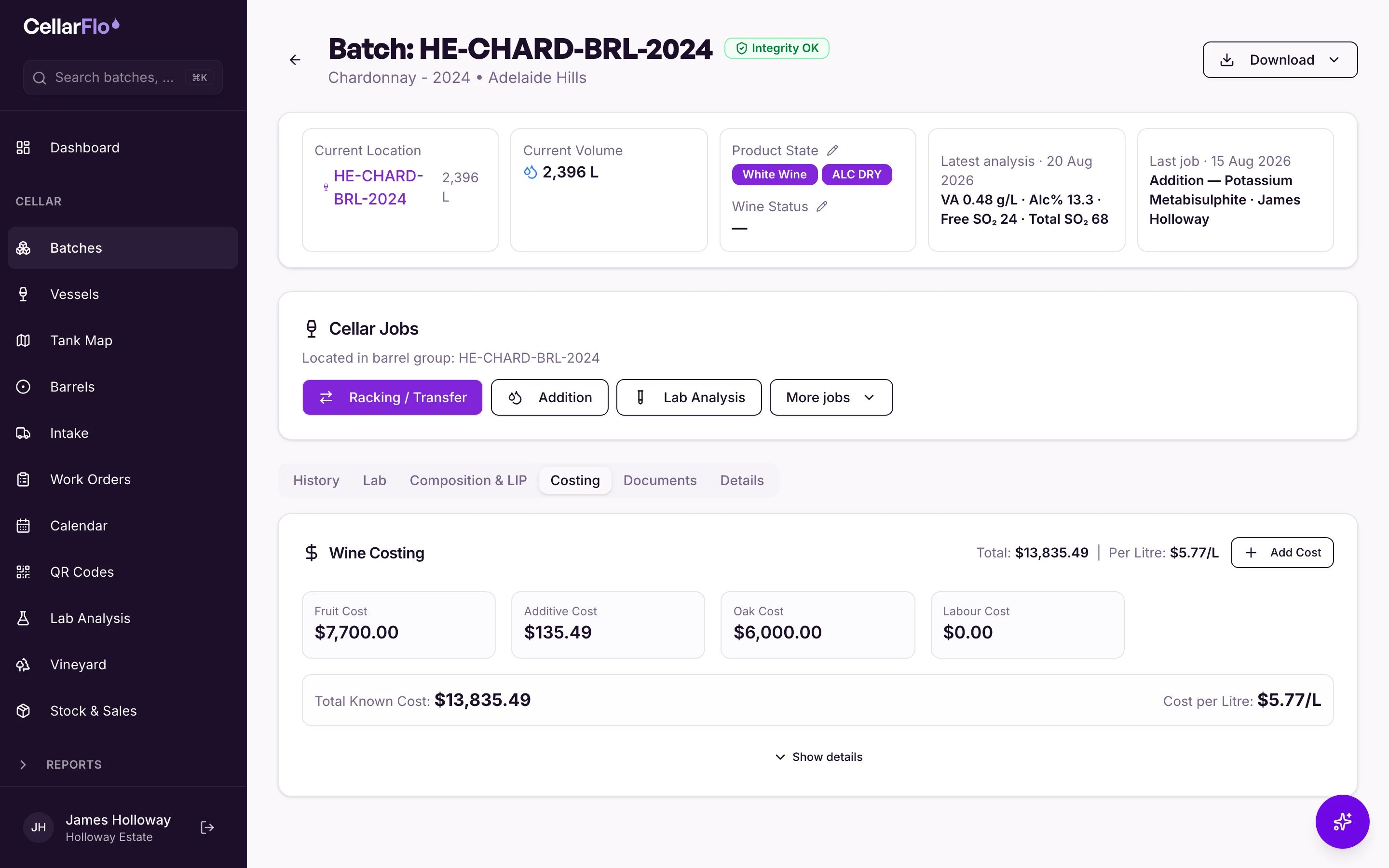
Client bottles go back with a Manifest.
Bottling a client’s wine puts bottles in stock that belong to the client and can never be sold as yours. When they leave by Dispatch to client, CellarFlo prints a Manifest as Word, PDF or CSV, and can email it to the client.
Product Recall works from a Manifest too, back to the vineyard and grower. Client dispatch is on Estate and above.
Client portal
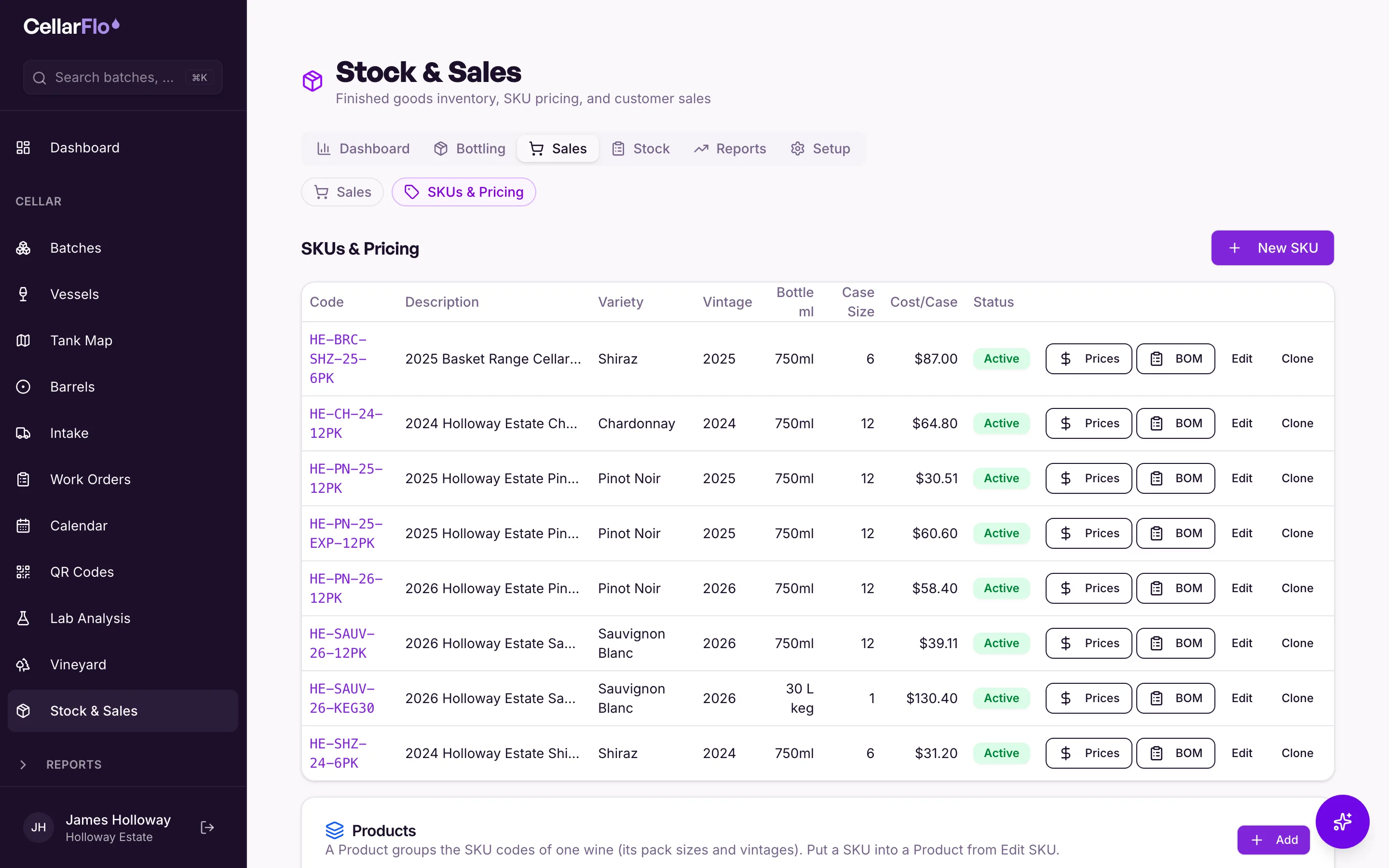
A view of their own.
Each client can have its own sign-in to a read-only view of its wine: batches, tanks and barrels, bottled stock and dry goods, storage, billed months, and dispatches with their Manifests, with CSV and PDF reports. A client only ever sees its own wine. Each client sign-in uses one of your logins.
Questions
Contract winemaking, answered.
Which plans can use contract winemaking?
Every plan, with the Contract Winemaking add-on. Sending billing to your accounting software and dispatching client bottles need Estate or above. The plan builder shows what fits your winery.
Does CellarFlo send invoices to my clients?
No. CellarFlo keeps the record of costs and charges. A client’s month goes out as a CSV, or as a draft invoice in Xero, MYOB or QuickBooks, where you check it and send it.
What if a cost is entered after I have billed the month?
The billed month stays as it was sent. The late cost goes on the next month you have not yet billed, flagged as a late entry with its own date. A cost undone after billing becomes a credit line in the same way.
Can a wine belong to more than one client?
Yes. Each owner holds a percentage of the wine, and their litres and cost follow the wine’s real volume. Bottling charges are not worked out for a shared wine; they show as “Not recorded”.
Is my labour on a client’s wine billed?
By default, yes: the hours times the rate of the person who did the work. Turn it off for a client and the labour still counts in the wine’s cost but stays off their bill.
How does costing work for client wine?
The same way as for your own wine: a dated record of every cost and a cost per litre on the wine held today. How wine costing works.
Know every client’s wine. Know every client’s month.
Open the demo winery and follow a batch from the docket to the bottle.